


Cliò E. Agrapidis, PhD
The transition to sustainable energy systems requires solutions that integrate with existing industrial infrastructures. Europe’s heavy transport and aviation sectors depend on energy-dense fuels, and replacing these with renewable alternatives is essential for meeting Green Deal and Fit for 55 targets.
But conventional biofuels alone cannot deliver the scale or carbon savings needed, and industrial CO2 emissions remain a major challenge.
Turning CO2 Emissions into Renewable Fuel
Therefore, the FUELGAE project is developing an approach that turns this challenge into an opportunity: using CO2-rich off gases from bioethanol and steel production to cultivate microalgae for advanced biofuels. This strategy not only supports renewable fuel production but also contributes to carbon capture, creating a dual benefit for climate mitigation.
Testing Microalgae Strains in High-CO2 Conditions
A recent study by FUELGAE partner CERTH validates this approach. Researchers set out to determine which available microalgal strains represent the best options for growth under stress conditions, as represented by a high-CO2 environment.
Previous studies had already shown an increase in growth under similar conditions. However, the current study focused on a specific composition of off-gases, namely those from a second-generation bioethanol plant. The team at CERTH precisely reproduced the gases emitted by the PERSEO plant located in Valencia (Spain), thanks to the ongoing collaboration in the FUELGAE project.
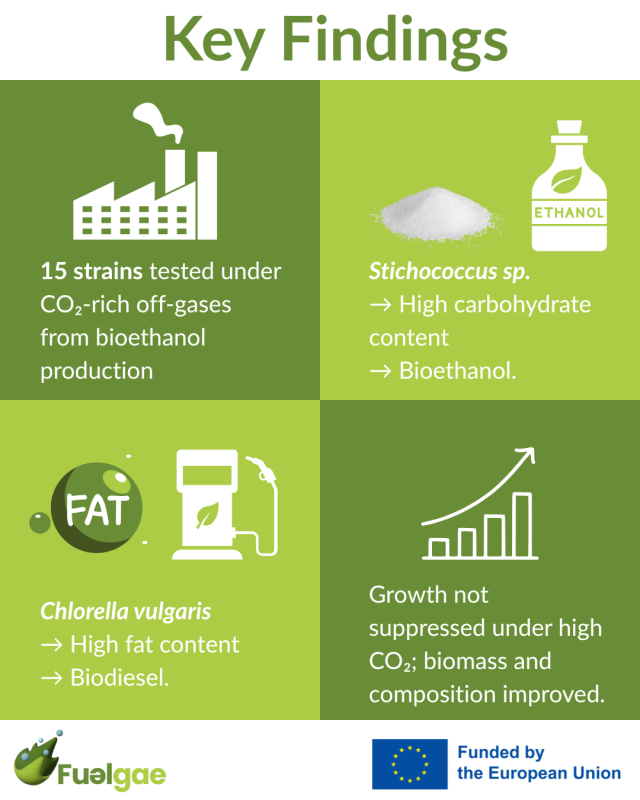
To make their comparison as extensive as possible, scientists at CERTH considered 15 different microalgal strains in their study. They kept them in flasks and exposed them to the reproduced CO2-laden off-gases without any pretreatment. Lastly, they monitored growth quality, and measured the amount of biomass produced and its composition in terms of lipids (fats), sugars and proteins in each sample.
Key Findings: Biomass Growth and Composition
Assessing growth quality allows one to monitor how the original organism reproduces. It helps assess whether cells keep being vital and healthy, and the proportion of alive-to-dead cells.
For biofuel applications, it is important to quantify the amount of available biomass, which represents the actual resource needed to create the biofuels. This measurement gives an idea of the yield of the specific strain under the imposed high-CO2 stress conditions.
Lastly, different applications require different ratios of lipids to sugars. In particular, lipids are the primary source to produce hydrocarbon-based biofuels such as biodiesel, while carbohydrates (sugars) are at the core of the process for bioethanol.
The study confirms that high-CO2 conditions alter the composition of microalgal biomass, making certain strains more suitable for specific applications. Consequently, optimizing growth conditions remains the main challenge for microalgae growth for biofuel production. For example, when optimizing for high-lipid content, one could involve the simultaneous application of multiple stress factors besides high-CO2 content, which may enhance lipid yield but requires balancing with other biochemical product yields (such as sugars or proteins).
Choosing the Best Strains for Biofuel Applications
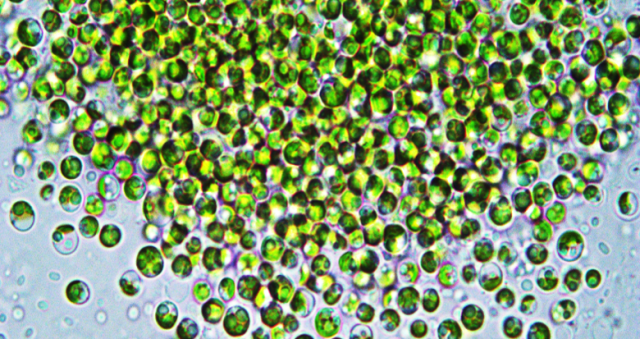
In one case study, the FUELGAE project focuses on biofuel production in the form of bioethanol. As mentioned, for this application one needs a high concentration of carbohydrates and sugars. These, however, are usually ranked as lower priority in growth optimization strategies for microalgae, as currently they are largely used in more niche industries.
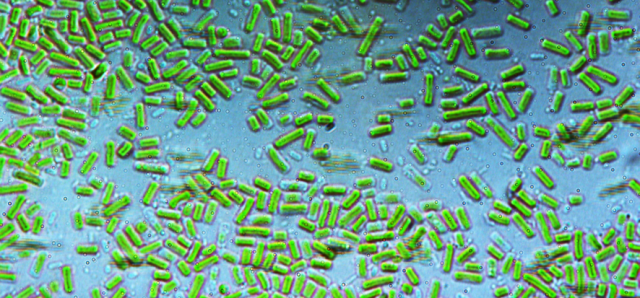
Thus, researchers isolated the most promising microalgal strain (Stichococcus sp.) for biofuel applications and other processes that utilize sugars. They were also able to determine which of the 15 analysed strains in CO2-laden growth conditions is best for lipid-based applications (Chlorella vulgaris). This is relevant to the other case study of the project.
These two strains show the greatest potential for biofuel applications. However, trying to optimise conditions to maximise yield of both lipids and sugars within only one chosen strain might prove difficult, as optimising for one product usually inhibits the other.
Next Steps for Scaling Up and EU Impact
Moreover, experiments were done in small flasks, but production will scale up by using photobioreactors and implementing further optimization in the given CO2-enriched conditions for both the species and the process.
This study confirms microalgae can grow when exposed to off industrial gases like those coming from a bioethanol refinery. Not only is growth not suppressed, but some important indicators like the amount of biomass and the concentrations of lipids or sugars are increased.
This progress supports EU efforts to decarbonise hard-to-abate sectors and strengthen energy resilience, bringing the EU closer to leading the green transition from fossil fuels to next-generation biofuels.


