


By Cliò E. Agrapidis, PhD
The Transport Emissions Challenge
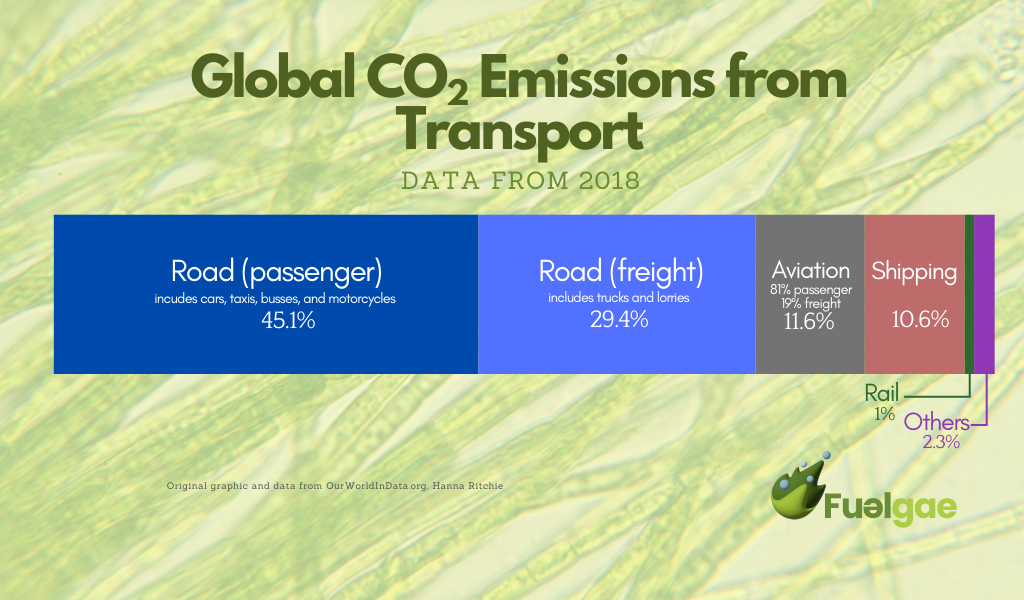
Transport is a large contributor to greenhouse gas emissions, accounting for almost one quarter of global carbon dioxide emissions. Almost one third of these comes from trucks carrying freight. In the EU, more than 10% of transport emissions are due to aviation. The common dominator for these sources of greenhouse gases is the reliance on fuel.
While electrification is progressing, it’s not a one-size-fits-all solution. Electric cars are an always more common reality, but the same technology cannot be easily extended to heavier means of transport like trucks or planes. This is where liquid biofuels from microalgae and other renewable resources come in, offering a carbon-neutral alternative that can integrate into existing transport infrastructure.
The Power of Microalgae: A Natural Solution
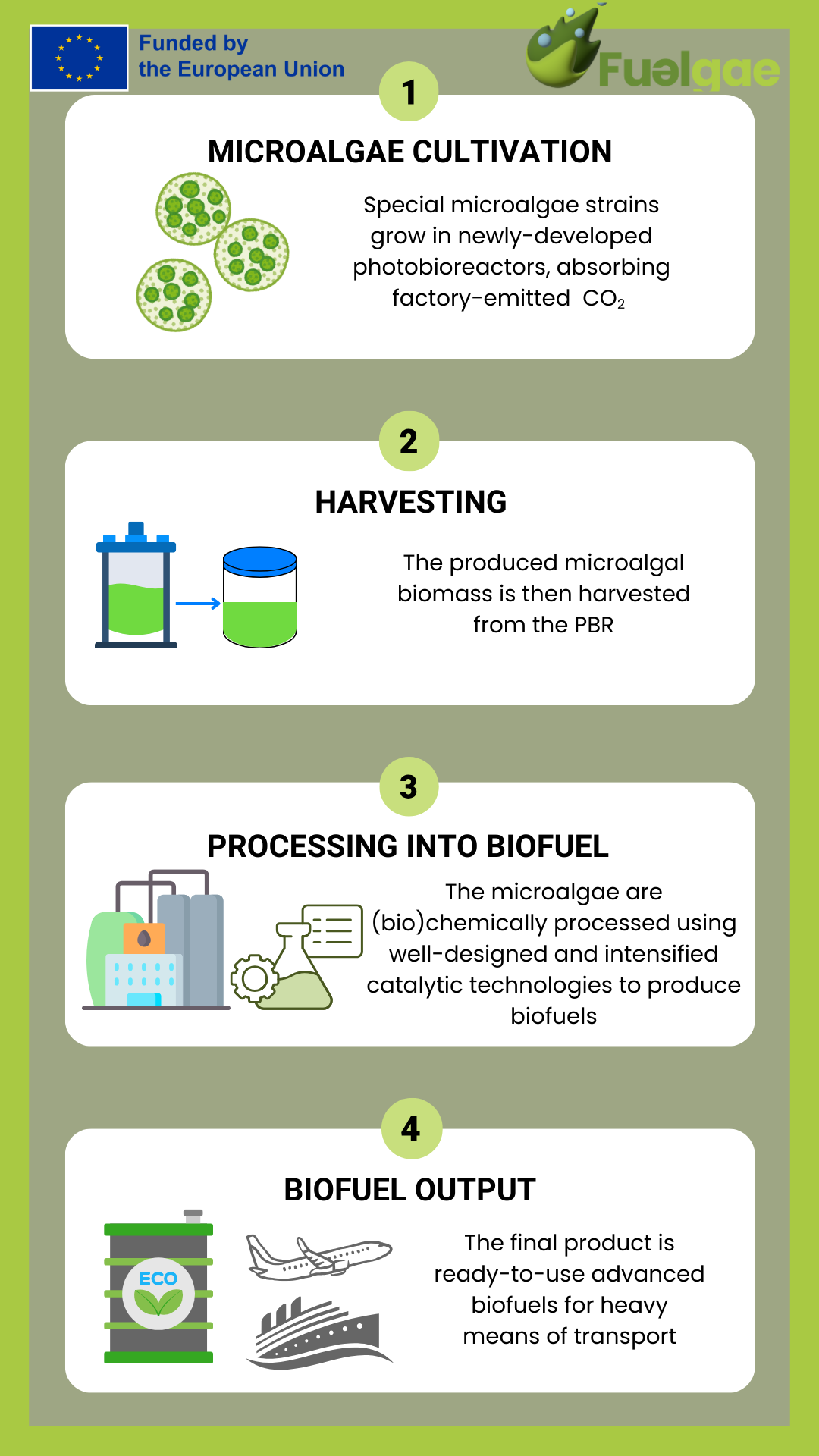
The FUELGAE project is working towards the development of advanced biofuels based on microalgae. These micro-organisms are in principle rich in lipids and polysaccharides, which are natural oils and sugars. These bio-based compoundsthat can be converted into liquid transportation biofuels, offering a way to a carbon-neutral alternative to fossil fuels. To reach this goal, the productivity and effectiveness in the microalgae production systems need to be enhanced. This can be accomplished by improving the selected microalgae strains, or by intensifying the photobioreactor (PBR) designs.
To lay the groundwork for the development of PBRs to be installed and operate in place close to working factories and make use of the on-site produced CO2, FUELGAE researchers have collected the recent available literature on PBRs and crafted an overview of the state-of-the-art knowledge and technology in this field.
How Photobioreactors Make Biofuel Production Possible
Major challenges also include the harvesting of biomass and the extraction of compounds produced inside the microalgae. Another is ensuring stable CO2 supply, as fluctuations in industrial emissions could impact growth rates. In addition, current limitations in product extraction, purification, and full biomass utilization make microalgae-based biofuels economically challenging. All of these challenges boil down to choosing and optimizing the right design and configuration for the PBR. However, defining the appropriate design depends on several case-specific factors, primarily the type of microalgae to be cultivated and the conditions in which the PBR is to be installed.
Challenges in Photobioreactor Technology
For example, climate and environmental conditions play a major role in microalgae growth. Implementing temperature control measures is essential in maximizing microalgae productivity. Regions experiencing strong seasonality will have to adjust the PBR operation accordingly. Depending on the climate, the authors are able to make recommendations on which PBRs are best suited. “Tubular and air-lift PBRs are well suited for warmer climates due to their ability to dissipate heat efficiently; in contrast, PBRs in greenhouse are ideal for colder climates as they provide insulation and protection from low temperatures, while stirred-tank PBRs can be equipped with efficient heating systems”.
Optimizing Photobioreactors for Efficiency and Growth
To improve the cultivation conditions, authors foresee the installment of probes and/or sensors as key tools in enhancing the performance of PBRs. By monitoring internal and external conditions in real-time, it will be possible to design automated responses adjusting settings and parameters to adapt to the real-time data. For example, a decrease in detected light might activate artificial lamps, a change in temperature will activate heating or cooling systems, while depleted nutrition levels will result in adding the missing elements to the PBR. A high-end prototype for such on-line monitoring is also being developed in FUELGAE, offering a novel approach to efficiently control PBRs.
Notably, the current extensive costs that come with PBRs restrict their usage to high-value industries and niche markets, such as healthcare and cosmetics. Bringing down the costs of operation for this technology is essential in order to push the growth of the microalgae industry.
Thanks to this overview of the current different available PBRs, the authors suggest to focus on optimizing the space utilization (vertical vs. horizontal cultivation) and enhance the scalability in new PBR designs, in order to mitigate some of the infrastructural challenges. Moreover, another objective in new designs should be “the efficient prevention, monitoring and suppression of contamination, along with enhanced illumination systems to stimulate the growth of photoautotrophic microorganisms rather than heterotrophic ones, and also the design of appropriate cultivation media”. In other words, future PBRs should be designed to ensure that the right types of microalgae thrive, while minimizing unwanted organisms.
The Path Forward: Standardization and Investment
FUELGAE also calls for the standardization of “research practices and operational guidelines for microalgae”. In particular, a unified framework for PBR design and operation would ease regulatory approval, lower market entry barriers, and encourage investment in large-scale microalgae biofuel production. For these goals, tubular PBR types and flat-panel PBRs are the best candidates for standardization.

A Greener Future with Microalgae Biofuels
PBRs for microalgae cultivation can reshape a variety of fields, particularly biotechnology, environmental sustainability and renewable energy. By optimizing PBRs, we can not only produce sustainable biofuels, but also create new economic opportunities and enhance energy security. With the right investment and regulatory support, microalgae biofuels could help us meet climate goals while ensuring a smooth energy transition for transport.


